The ‘quiet’ infrastructure behind Australia’s next industries
How a decision made 20 years ago has become one of Australia’s most successful nation-building investments.




How a decision made 20 years ago has become one of Australia’s most successful nation-building investments.
First published by InnovationAus on 8 July 2026.
That decision became the National Collaborative Research Infrastructure Strategy (NCRIS) and it has become one of Australia’s most successful nation-building investments.
This bipartisan investment of $5.5 billion over the past two decades has enabled smarter port operations, helped solve medical mysteries, supported the growth of mining and agriculture, and underpinned the growth of new industries.
I say that not as an observer from the sidelines. I was involved in the first and second national research infrastructure roadmaps and later, as Australia’s Chief Scientist, served on the advisory committee.
I also chaired the committee for the Victorian node of the Australian National Fabrication Facility, based at the Melbourne Centre for Nanofabrication in Clayton, for nearly a decade.
What I saw there was the NCRIS model at its best. Researchers, startups and industry partners could walk through the same door and use tools that none could sensibly afford alone.
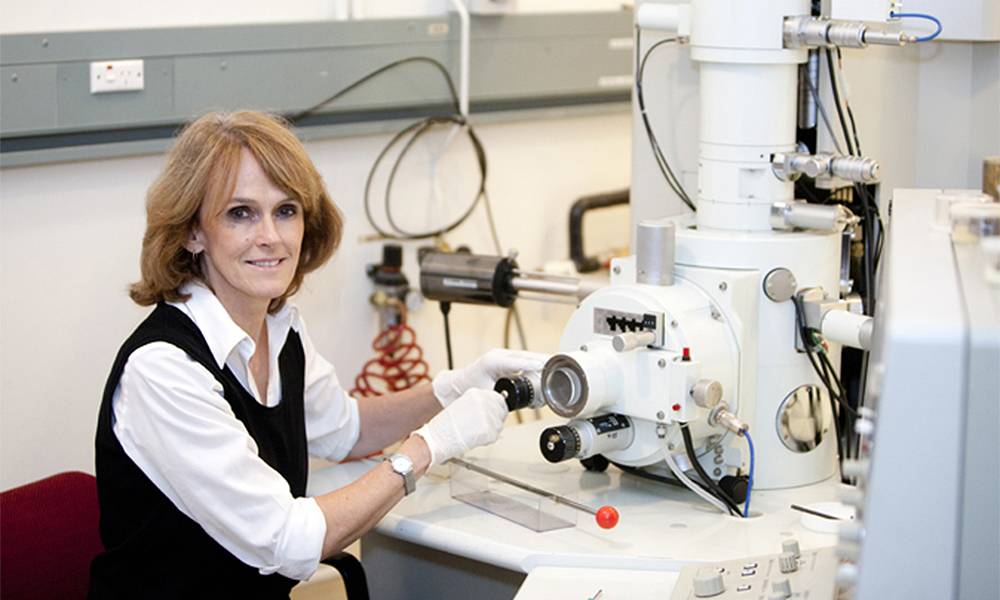
They were supported by highly skilled technical experts who knew how to turn ambition into reliable experiments, prototypes and devices. The equipment mattered but the people mattered just as much.
This is the part of NCRIS that deserves more public attention. It has not only delivered for science, health and the environment, it has become an essential part of Australia’s industrial base.
It has helped ports operate more safely and efficiently, supported rapid quarantine testing for high-risk crop imports, contributed to nuclear security, helped uncover the extent of endometriosis, supported green hydrogen technology at Port Kembla, and helped monitor invasive species, pollen, sewers, reefs, forests and coastlines.
It has also helped create the conditions for new industries. In quantum, Australia’s strength has never been simply one brilliant idea or one laboratory.
It has been decades of capability building: precision fabrication, advanced microscopy, cryogenics, cleanrooms, high-performance computing, measurement, materials and people who know how to use them. Companies such as Diraq, Silicon Quantum Computing and Quantum Brilliance are part of that longer national story.
NCRIS has also been good economics. It reduces duplication. It gives researchers and companies access to state-of-the-art facilities in a country that cannot afford wasteful fragmentation. It builds national platforms rather than isolated islands of excellence.
It trains a workforce in the technologies that will shape the next economy, from biomanufacturing and semiconductors to AI-enabled discovery, climate resilience and critical minerals.
This is why the bipartisan history of NCRIS matters. Research infrastructure cannot be built on the rhythm of election cycles. NCRIS was created under the Howard government and supported and expanded by Labor governments.
That continuity is not incidental. It is the reason the program has worked. You cannot create a clean room, a marine observing system, a national data platform or a supercomputing capability in three-year bursts and expect world-class outcomes.
The challenge now is to treat NCRIS not as a policy program that periodically needs to justify its existence but as a permanent part of how Australia does research and development.
NCRIS has not only delivered for science, health and the environment, it has become an essential part of Australia’s industrial base.
We do not ask whether Australia should continue to have roads, ports, energy systems or digital networks.
We maintain and modernise them because they are essential to national productivity. Research infrastructure should be understood in the same way. It is the infrastructure of ideas, invention and resilience.
The next two decades will be even more important than the two we have just been through. Australia will need to discover and process critical minerals more sustainably, prepare for emerging diseases, model climate and coastal change, translate medical research faster, develop trusted AI and build sovereign capability in technologies which are central to security and prosperity.
NCRIS is not the complete answer to those challenges but without it, Australia’s response would be slower, weaker and more expensive.
There are three practical steps we should take.
First, we need secure, long-term funding that gives facilities the confidence to plan, renew equipment, retain expert staff and work with industry on timeframes that match real innovation.
Second, we need stronger coordination between the Commonwealth and state and territory governments.
NCRIS succeeds because it is national but its facilities are embedded in local precincts, universities, agencies and companies. The next phase should make that partnership more deliberate, so investment decisions reinforce each other rather than compete.
Third, we need to measure success beyond research publications. Publications matter. But so do start-ups, standards, policy decisions, trained technicians, industry users, public health outcomes, environmental monitoring, defence readiness and exports. The next 20 years of NCRIS should be judged by the nation-building outcomes it enables.
Australia is good at inventing new programs but we are not always good at sticking with what works.
NCRIS has worked. It has given Australia world-leading research capability, reduced duplication, created skilled jobs, supported industry and helped turn science into public value.
After 20 years, the lesson is clear. If we want Australia to be more than a consumer of other nations’ discoveries, we must keep investing in the shared infrastructure that allows us to make our own.
The next generation of Australian industries will be built in our clean rooms, supercomputing centres, fabrication facilities, imaging platforms, data commons and biosecurity laboratories, by people who know how to work across disciplines and sectors.
Over the past 20 years, NCRIS has shown us what is possible. Now we should make it business as usual for the next 20 years.

The architecture of National Research Infrastructure enables Australia to develop and deliver outcomes from its research strengths. The 2026 NRI Roadmap will facilitate consideration of emerging opportunities and guiding investment decisions using the renewed National Science and Research Priorities.

Diversity and Inclusion
Reconciliation Action Plan Equity, diversity and inclusion policy Diversity & Inclusion ToolkitConnect


Australian Academy of Technological Sciences & Engineering
Level 2, 28 National Circuit Forrest ACT 2603
+61 2 6185 3240 | info@atse.org.au
ABN 58 008 520 394 — ATSE is registered with the Australian Charities and Not-for-profits Commission,
and is a Deductible Gift Recipient (DGR).